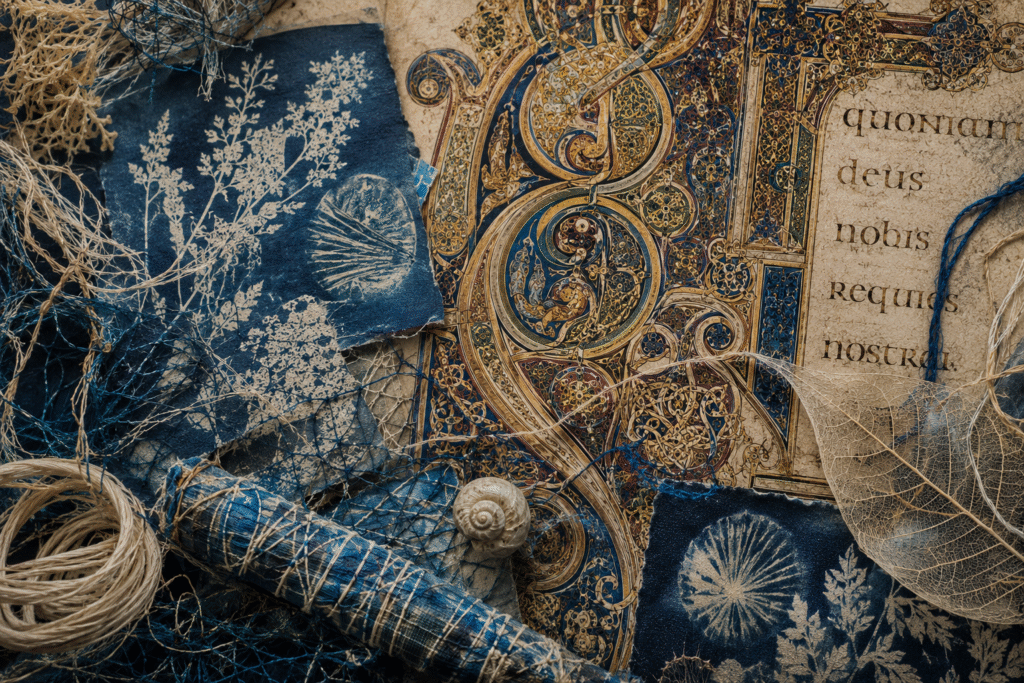
Reading about the new research surrounding the origins of the Book of Kells brought me back to the time I spent studying its pages last summer. Scholars are now reconsidering whether the manuscript may have originated in the Pictish monastery of Portmahomack in Scotland rather than solely within the Irish tradition it has long been associated with. What stayed with me most was the discussion around material process, vellum making, pigments, carving, ornament, and the close relationship between labor, devotion, and land.
While reading, I found myself thinking about how the Book of Kells moves beyond manuscript tradition and becomes something deeply tied to material knowledge and human touch. The layering of spirals, botanical forms, animals, symbols, and ornament carries a sense of accumulated care and attention over time. It also made me reflect on my own interest in wrapping, knotting, cyanotype, marine debris, and plant knowledge as ways materials can hold memory.
The manuscript is a reminder that making has long been connected to preservation, ritual, and the passing of knowledge across generations. Even centuries later, these works continue to speak through their materials as much as through their imagery.