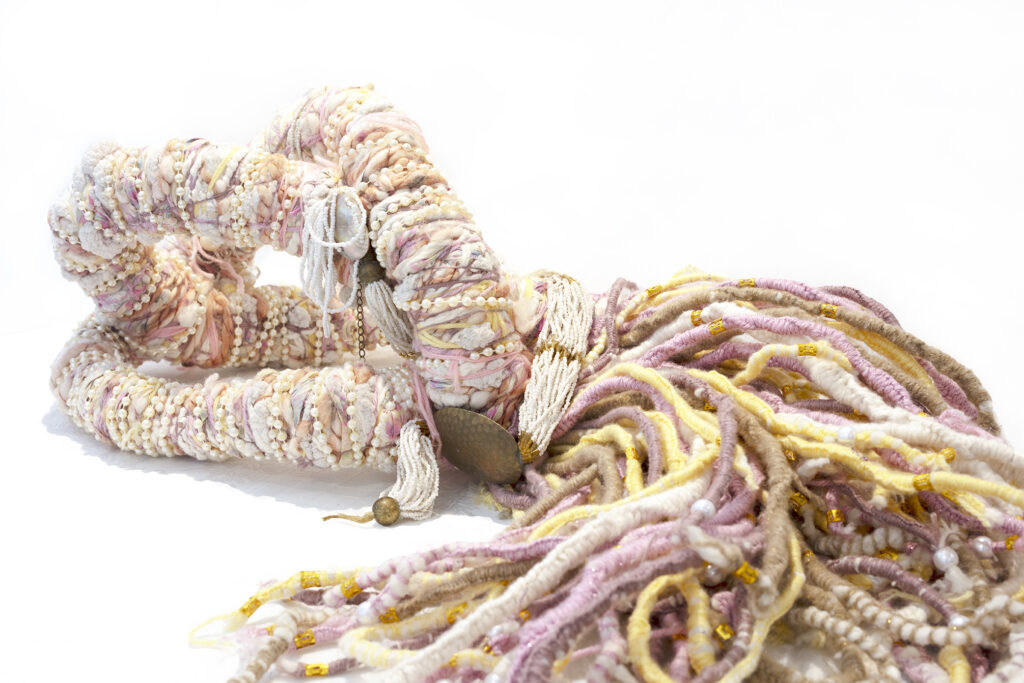
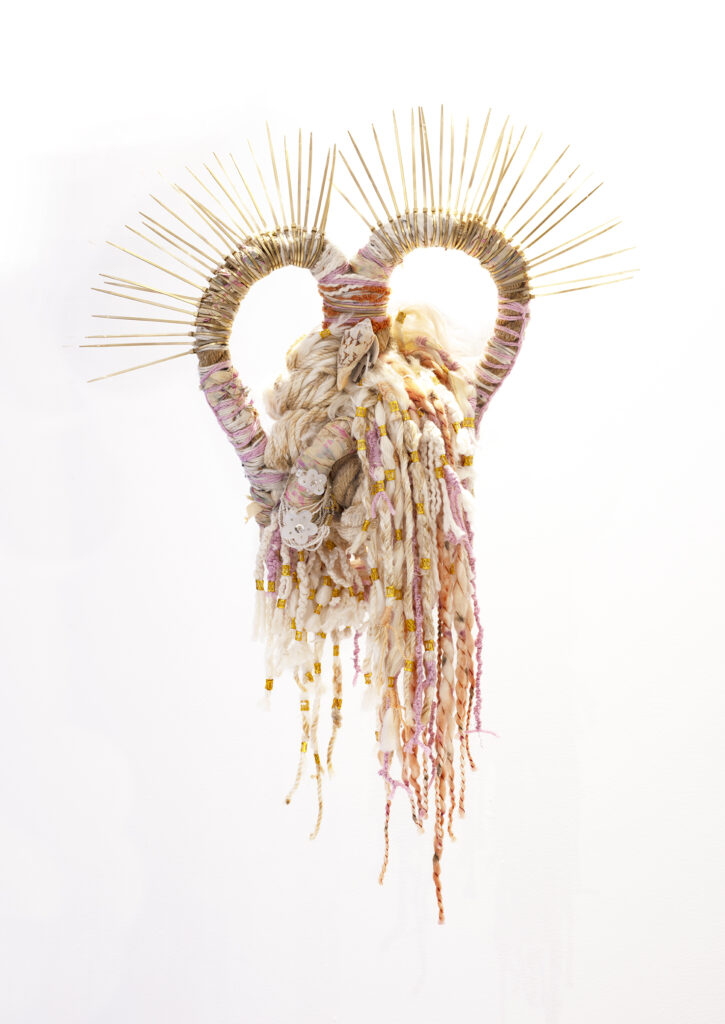
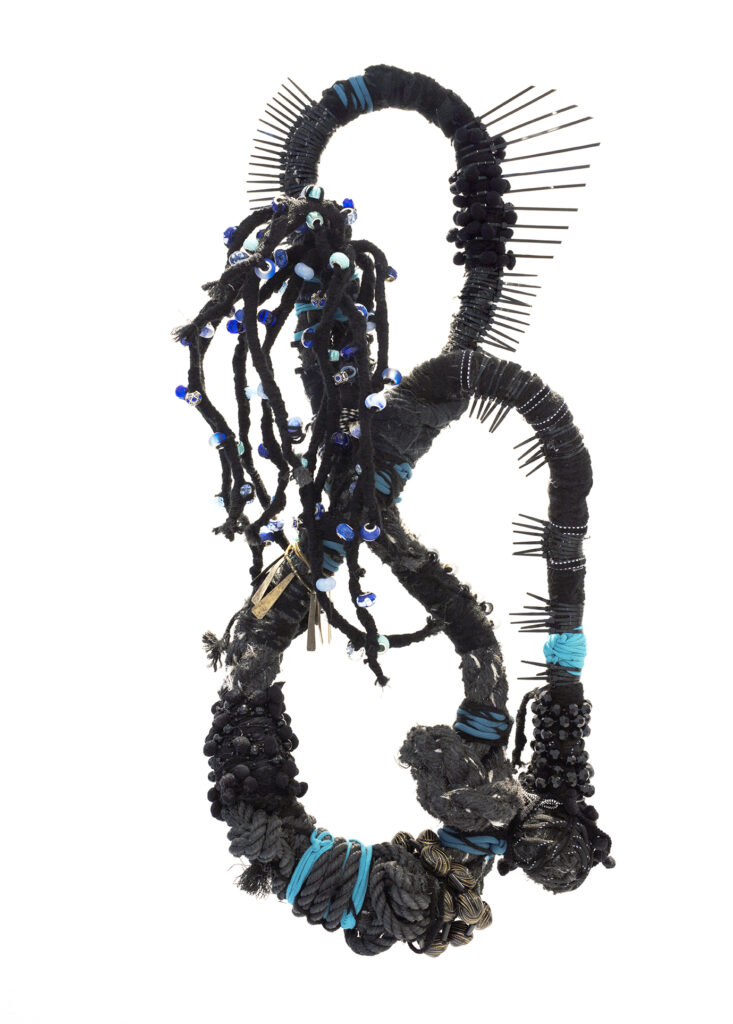
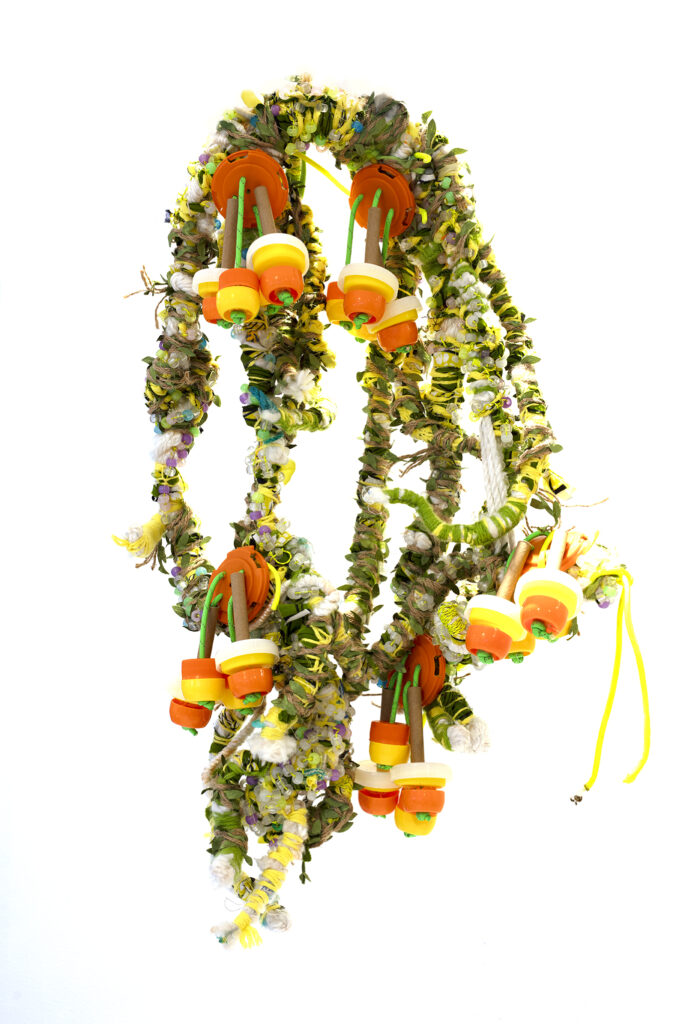
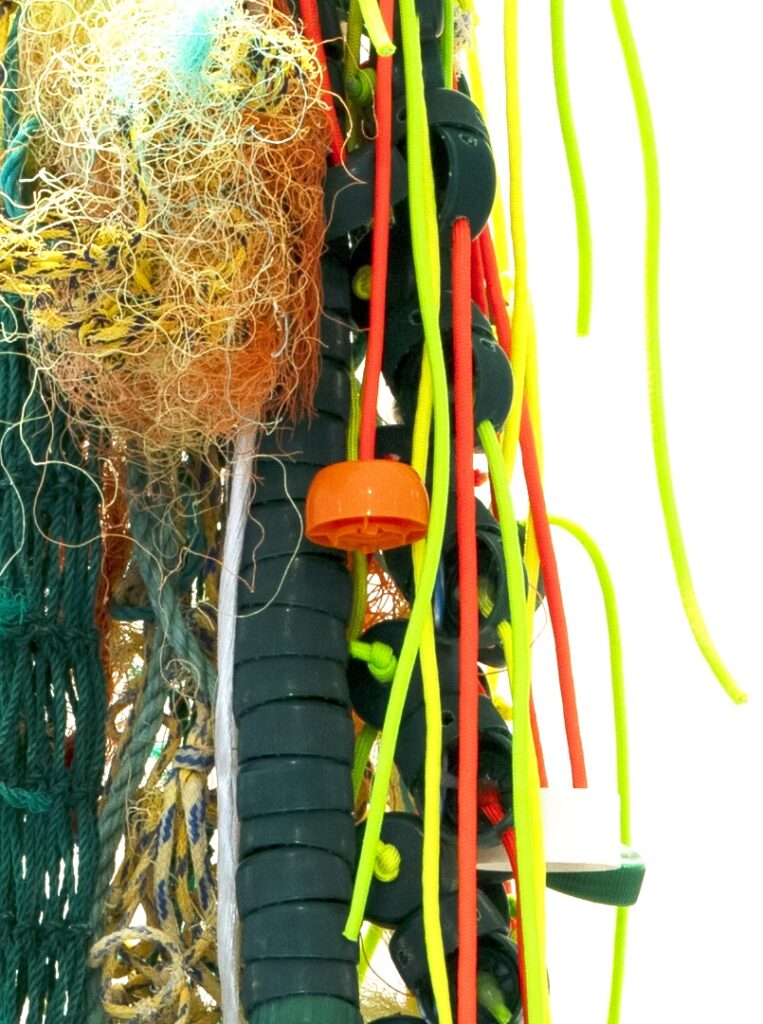
Pelagic Kin is a sculptural and installation-based body of work informed by research and speculative imagination in response to the history of the transatlantic slave trade and the Atlantic as a water grave. The project asks what forms might emerge if those lost to the ocean did not disappear, but transformed—absorbed into marine ecosystems and evolving over time into new marine-human hybrid beings shaped by pressure, survival, and memory.
The works are constructed using marine debris collected after hurricanes, including rope, nets, and plastic fragments, combined with hair, shells, beads, and industrial remnants. These materials are integrated through knotting, binding, and accumulation, transforming discarded objects into structural anatomies. The material choices intentionally mirror histories of forced movement, environmental degradation, and resilience under extreme conditions.
Rather than functioning as static memorials, the sculptures propose continuity and adaptation. Mutation is framed as strategy rather than damage, and form becomes a record of endurance. The ocean is positioned not only as a site of loss, but as an active archive and generative space where ancestral memory persists through ecological systems.
Pelagic Kin engages themes of environmental justice, historical trauma, and speculative futures, inviting viewers to consider how memory and resilience are carried not only through narrative, but through material systems shaped by water, time, and transformation.