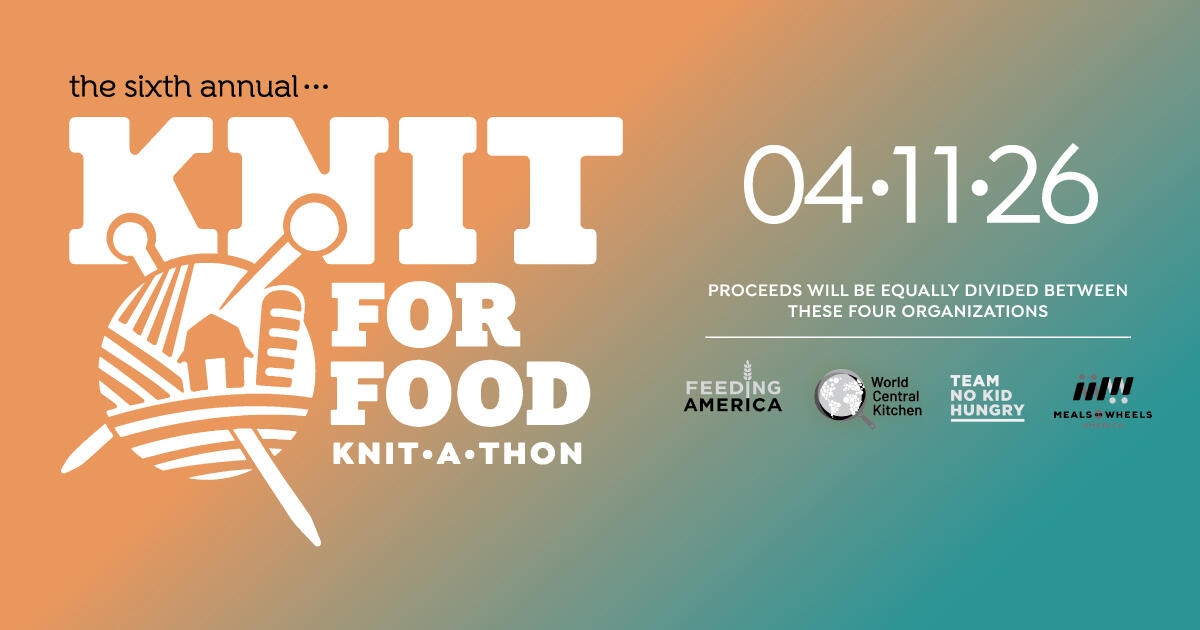
On April 11, 2026, knitters around the world will gather for the Knit for Food Knit-a-thon 2026, a 12-hour knitting marathon raising funds to fight food insecurity.
Participants can knit for the full twelve hours, join for a few rows, or simply donate. Funds raised will be shared equally among Feeding America, World Central Kitchen, No Kid Hungry, and Meals on Wheels.
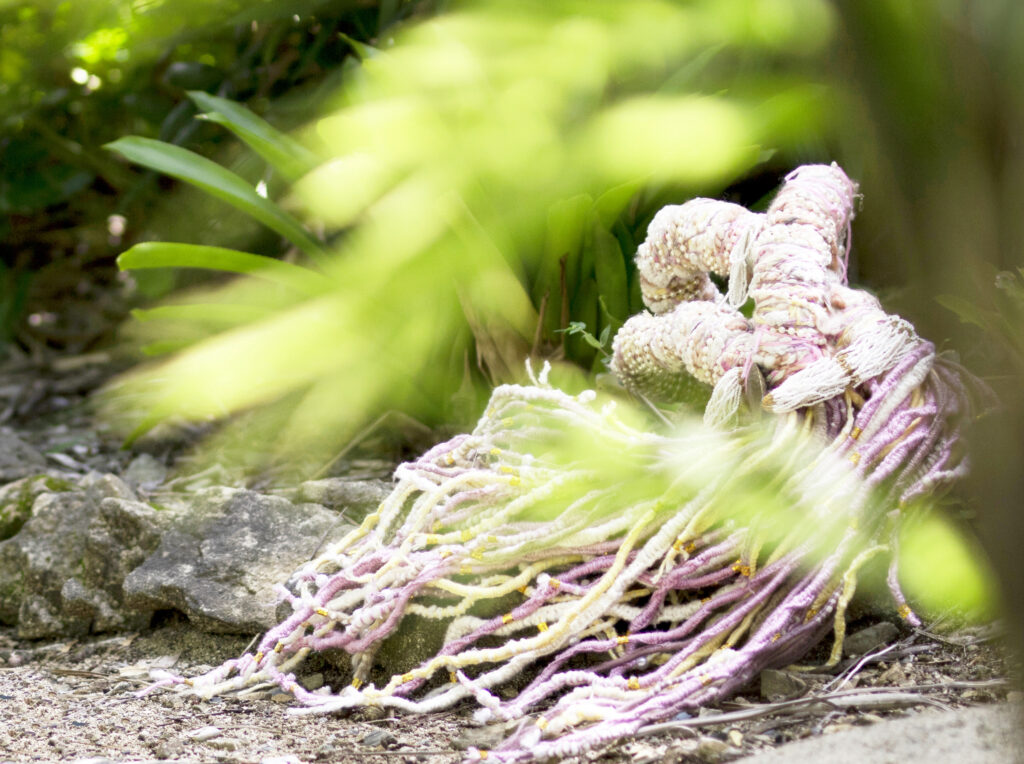
Fiber has always been a language of care. Stitch by stitch, makers gather across distances, using their hands to support something larger than themselves.
I recently joined Bridge Arts Gallery for an Expressive Creative Soul artist talk.
It was a chance to share a little about the work behind the work—my materials, the stories woven into them, and how fiber becomes a language for memory, protection, and repair.
If you missed the live conversation, the replay is now available.
Pour a cup of tea, settle in, and spend a little time in the studio with me.
There’s always a piece in my studio that has gone quiet the seam that split, the weave pulled too tight, the form I stopped trusting.
Instead of discarding it, I’ve been listening.
I’m inviting you to join me.
Set a timer for 15 minutes. Bring a stalled project or even just a scrap of cloth.
Gather what you have: fabric scraps, thread or yarn, a needle, scissors, clips or pins, and any found materials nearby, netting, ribbon, cordage, plant fibers. Nothing fancy required.
For five minutes, just explore. Twist. Wrap. Knot. For five minutes, respond to one place of tension. Mend visibly. For five minutes, let the materials suggest what comes next.
Don’t aim for perfect. Aim for relationship.
When the timer ends, stop. Step back. Notice what shifted.
If you participate, share a photo and a few words in the comments. Where was it tight? What changed?
Let’s gather here. Let’s hold what almost fell apart. Let’s begin again, together.
Some of us hide it well. Some of us drag it loudly behind us. Some of us pretend our hands are empty.
I carry a lifetime of racial trauma.
Not always visible. But weighted. Inherited. Accumulated in small daily increments.
The cart came to me as truth.
A shopping cart, the most ordinary American vehicle , has become the right container for what I have been pushing for decades. Plastic newspaper sleeves. Bad headlines. Disposable language. Woven into structure.
I refuse to let bad news be the only narrative.
So I spray the cart gold. I add a black racing stripe, velocity, lineage, survival. I attach a bell.
Joyful resistance is not softness. It is decision.
It is choosing to move forward without letting the weight define the direction. It is turning debris into design. It is building beauty out of what tried to diminish you.
When I recently read about his obsession with drawing human heads, how the skull became portal, how repetition became inquiry, I felt a quiet recognition. He wasn’t drawing likeness. He was excavating identity.
That resonates.
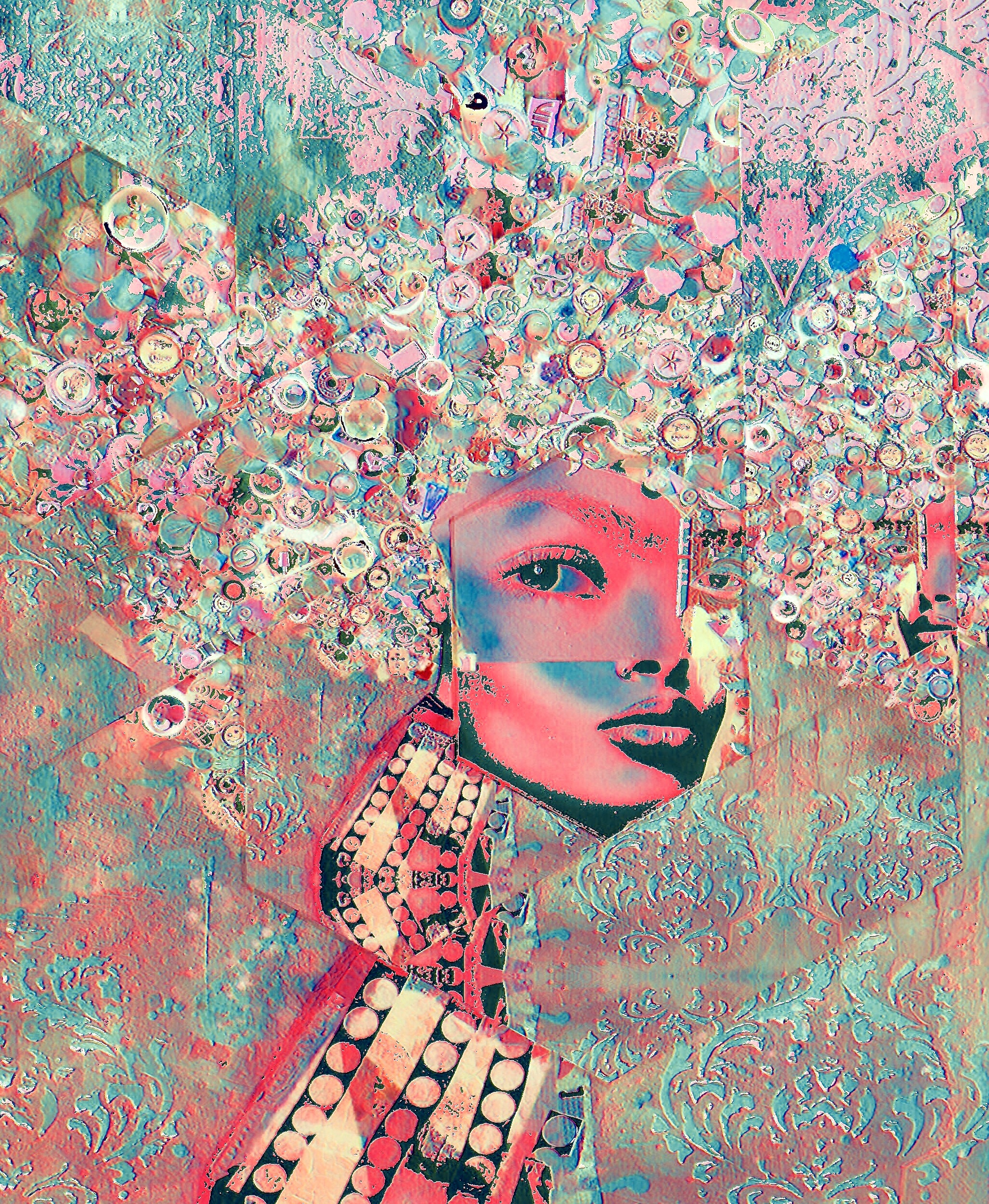
For much of my artistic life, I have returned to abstract self-portraiture as a way to understand my own mixed-race identity. Before the weaving, before the marine debris and sacred vessels, there were faces. Fragmented. Multiplied. Obscured.
The head was my terrain.
Inside it, I was always calculating. Adjusting. Disappearing and reappearing.
Mixed race. Black woman. Read before I could speak.
So I studied myself first. Where to soften. Where to sharpen. Where to hide in plain sight.
Abstraction allowed me to map what it meant to code switch, those subtle recalibrations of voice, posture, softness, power. The masks were not theatrical; they were protective. Sometimes armor. Sometimes camouflage. Sometimes simply a way to hide in plain sight.
In those early works, faces fractured, eyes doubled, mouths silenced or amplified, I wasn’t trying to be obscure. I was trying to be honest. I was drawing the invisible labor of navigating racialized space.
The head became:
A map of tension
A container for ancestry
A site of translation
A sanctuary
Today my practice lives in fiber; knotting, wrapping, weaving memory into form. But when I look back at those early abstract self-portraits, I see the same impulse.
The masks became knots. The layers became cordage. The head became vessel.
Admiring Basquiat reminds me that returning to the same image again and again is not fixation, it is devotion. Returning to the head, again and again, is a way of saying: this is where my story lives.
And in that conversation, I continue to draw myself, fractured, layered, crowned, protected, learning that abstraction has always been my way home.
I’m happy to share that Power Puff and Black Racing Stripe has been selected for Fiber 2026, opening this Saturday at AlterWork Studios.
Fiber has always been a material of contradiction, soft yet resilient, domestic yet radical. This exhibition brings together artists working across traditional textile practices and contemporary fiber experimentation, showing just how expansive the medium has become.
For me, fiber is a language. It holds tension. It carries memory.
Power Puff and Black Racing Stripe sits within that conversation, playful on the surface, but rooted in deeper questions about identity, material culture, and the quiet power of making with our hands.
If you’re in New York, I hope you’ll stop by.
Opening Reception Saturday, March 7, 2026 6–9 PM
On View March 7 – March 28, 2026 Daily, 12–9 PM
📍 AlterWork Studios 40-20 22nd Street Long Island City, NY
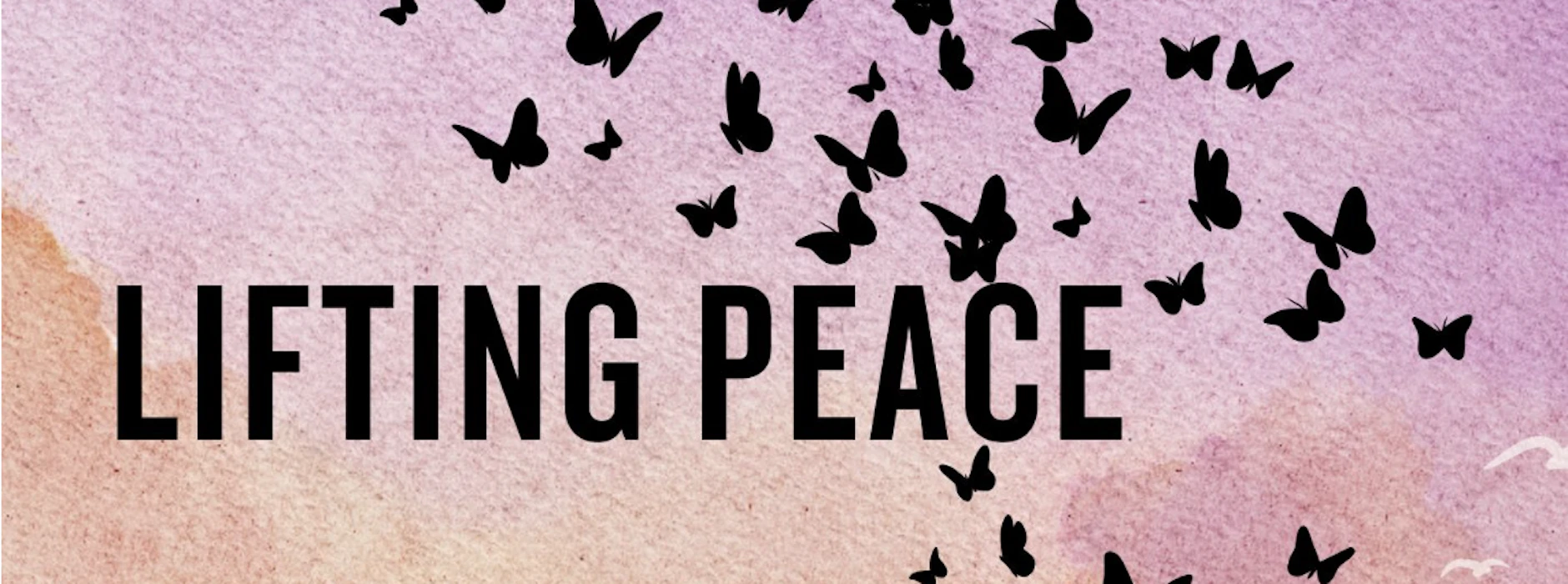
You’re invited to create a textile butterfly for peace to become part of “Lifting Peace off the Ground,” a collaborative banner being assembled in Kjipuktuk (Halifax), Mi’kma’ki (Nova Scotia, Canada).
This growing work is led by:
Nova Scotia Voice of Women for Peace
Muslim Women’s Study Group
Halifax Raging Grannies
How to Participate
Create a butterfly (max 8cm x 8cm) using any cloth-like material — felted, embroidered, quilted, patchwork, or stitched by hand.
Mail by August 6, 2026 to:
Nova Scotia Voice of Women for Peace ℅ Kathrin Winkler 6280 Edinburgh St. Halifax, Nova Scotia Canada, B3L 1W2
The banner has already been displayed at Halifax City Hall and will be part of a 2026 Hiroshima/Nagasaki Memorial, with future plans to share it at the Canadian Peace Museum and the Hiroshima Peace Memorial Museum.
One butterfly is small. Together, they rise.
Be part of the art. Help lift peace off the ground.
I’m honored to share that my work will be included in FIBER 2026 at AlterWork Studios in Long Island City.
This exhibition gathers artists rooted in traditional fiber practices alongside those pushing the edges of contemporary textile work. It feels like home, structure and experimentation in the same room.
March 7–28, 2026 Opening Reception: Saturday, March 7 | 6–9PM AlterWork Studios 40-20 22nd Street, Long Island City, NY
I’ll be showing:
Power Puff, Black Racing Stripe Emotional Baggage Cart
Power Puff with Black Racing Stripe Emotional Baggage Cart
Theda Sandiford
Bike reflectors and bell, paracord, Fresh Direct bag yarn, doggie poop bags, plastic newspaper bags and plastic grocery bags woven on gold spray painted recovered shopping cart.
36 x 40 x 24 in
2021
We all carry emotional baggage. Some of us push carts. Some carry backpacks.
I carry a lifetime of racial trauma.
This piece transforms BAD NEWS into something radiant. Plastic New York Post sleeves become structure. Gold becomes insistence. The black racing stripe becomes momentum.
I choose joyful resistance.
Not denial. Alchemy.
If you’re in New York, come stand beside the cart. Listen for the bell.